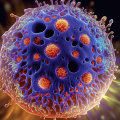
Exosomes are small extracellular vesicles, typically ranging from 30 to 150 nanometres in diameter, that are secreted by various cell types into the extracellular environment. These vesicles play a pivotal role in intercellular communication, acting as carriers of a diverse array of biomolecules, including proteins, lipids, and nucleic acids. The biological significance of exosomes lies in their ability to facilitate the transfer of these molecular components between cells, thereby influencing numerous physiological and pathological processes. In the context of cancer, exosomes have emerged as key players in the progression and treatment of the disease.In cancer biology, exosomes are not merely by-products of cellular activity; they actively participate in shaping the tumour microenvironment. Exosomes are small extracellular vesicles, typically ranging from 30 to 150 nanometres in diameter, that are secreted by various cell types into the extracellular environment. These vesicles play a pivotal role in intercellular communication, acting as carriers of a diverse array of biomolecules, including proteins, lipids, and nucleic acids. The biological significance of exosomes lies in their ability to facilitate the transfer of these molecular components between cells, thereby influencing numerous physiological and pathological processes. In the context of cancer, exosomes have emerged as key players in the progression and treatment of the disease.In cancer biology, exosomes are not merely by-products of cellular activity; they actively participate in shaping the tumour microenvironment.
Tumour-derived exosomes can promote angiogenesis, enhance metastatic potential, and contribute to immune evasion by modulating the behaviour of surrounding cells. For instance, they can carry oncogenic proteins or microRNAs that alter the gene expression profiles of recipient cells, leading to enhanced survival and proliferation of cancer cells. This intricate interplay underscores the importance of understanding exosomal dynamics in cancer progression.Moreover, the therapeutic potential of exosomes has garnered significant interest in recent years.
Exosomal therapy
refers to the use of exosomes as vehicles for drug delivery or as therapeutic agents themselves.By harnessing their natural ability to transport bioactive molecules, researchers are exploring innovative strategies to improve drug efficacy and reduce side effects in cancer treatment. This approach not only opens new avenues for targeted therapy but also highlights the need for a deeper understanding of exosome biology to fully exploit their capabilities in clinical settings.By harnessing their natural ability to transport bioactive molecules, researchers are exploring innovative strategies to improve drug efficacy and reduce side effects in cancer treatment. This approach not only opens new avenues for targeted therapy but also highlights the need for a deeper understanding of exosome biology to fully exploit their capabilities in clinical settings.
The Biology of Exosomes
Exosomes are a type of extracellular vesicle that play a pivotal role in intercellular communication. Understanding the biology of exosomes is essential for comprehending their implications in cancer progression and treatment. These vesicles are formed through a complex process known as biogenesis , which involves several key steps.The formation of exosomes begins with the inward budding of the plasma membrane, leading to the creation of early endosomes.As these endosomes mature, they undergo a series of transformations, ultimately resulting in the formation of multivesicular bodies (MVBs). Within these MVBs, intraluminal vesicles (ILVs) are generated through further membrane invagination. When MVBs fuse with the plasma membrane, they release ILVs into the extracellular space, at which point they are referred to as exosomes.The composition of exosomes is highly heterogeneous and reflects the physiological state of their parent cells. They contain a diverse array of biomolecules, including:
- Proteins: Exosomes carry various proteins, including receptors, enzymes, and structural proteins that can influence recipient cell behaviour.
- Lipids: The lipid bilayer of exosomes is enriched with specific lipid species that can modulate membrane fluidity and signalling pathways.
- Nucleic acids: Exosomes are known to transport both messenger RNA (mRNA) and non-coding RNA, which can affect gene expression in target cells.
- Metabolites: Small molecules such as metabolites can also be found within exosomes, contributing to their functional roles.
In the context of cancer, exosomal cargo can influence tumour growth, metastasis, and even resistance to therapies. For instance, proteins involved in angiogenesis or immune evasion may be packaged into exosomes by cancer cells and delivered to surrounding tissues or immune cells, facilitating a more favourable environment for tumour progression.In summary, the biology of exosomes encompasses their formation through endosomal pathways and their complex composition. This understanding is crucial for exploring their potential roles in cancer treatment and diagnosis.
Exosomes in Cancer Progression
Exosomes are increasingly recognised as pivotal players in the complex landscape of cancer progression. These nanoscale extracellular vesicles, secreted by various cell types, including cancer cells, facilitate intercellular communication and significantly influence the tumour microenvironment.Their role extends beyond mere cellular waste disposal; they actively participate in modulating the biological behaviour of surrounding cells, thereby promoting tumour growth, metastasis, and angiogenesis.One of the primary mechanisms through which exosomes contribute to cancer progression is by altering the tumour microenvironment. Tumours do not exist in isolation; they are embedded within a rich network of stromal cells, immune cells, and extracellular matrix components. Exosomes derived from cancer cells can carry a diverse array of bioactive molecules, including proteins, lipids, and nucleic acids, which can reprogram neighbouring non-cancerous cells. For instance, exosomal proteins can induce a phenotypic switch in stromal fibroblasts to become cancer-associated fibroblasts (CAFs), which support tumour growth by secreting growth factors and remodelling the extracellular matrix.Moreover, exosomes play a crucial role in metastasis , the process by which cancer spreads from its original site to distant organs.
They can facilitate this process by preparing distant sites for incoming cancer cells. This phenomenon, often referred to as the 'pre-metastatic niche', involves exosomes transferring specific molecules that prime target organs for colonisation by circulating tumour cells. For example, exosomes can enhance vascular permeability and promote inflammatory responses in distant tissues, creating a conducive environment for metastasis.In addition to promoting metastasis, exosomes are instrumental in angiogenesis , the formation of new blood vessels from pre-existing ones. Tumours require a robust blood supply to sustain their growth and survival.
Exosomes released by tumour cells can carry pro-angiogenic factors such as vascular endothelial growth factor (VEGF) and other signalling molecules that stimulate endothelial cell proliferation and migration. This not only supports tumour expansion but also facilitates further metastatic spread.In summary, exosomes are integral to the multifaceted processes of cancer progression. By modifying the tumour microenvironment, promoting metastasis, and enhancing angiogenesis, they contribute significantly to the malignancy of tumours. Understanding these mechanisms opens new avenues for therapeutic interventions aimed at disrupting exosomal communication pathways in cancer treatment.
Exosomal Therapy: A New Frontier in Cancer Treatment
Exosomal therapy represents a groundbreaking approach in the realm of cancer treatment, leveraging the natural properties of exosomes to enhance therapeutic efficacy and minimise side effects.These nanoscale vesicles, secreted by various cell types, are rich in bioactive molecules, including proteins, lipids, and nucleic acids, which can be harnessed for targeted drug delivery and as therapeutic agents.One of the most significant benefits of exosomal therapy is its ability to facilitate targeted drug delivery. Traditional chemotherapy often suffers from systemic toxicity and limited specificity, leading to adverse effects on healthy tissues. In contrast, exosomes can be engineered to carry therapeutic agents directly to tumour cells, thereby increasing the concentration of drugs at the site of action while reducing collateral damage to surrounding healthy cells. This targeted approach not only enhances the effectiveness of the treatment but also improves patient quality of life.Moreover, exosomes possess inherent properties that make them ideal candidates for drug delivery systems.
Their lipid bilayer structure allows for the encapsulation of hydrophobic drugs, while their small size enables them to penetrate tissues more effectively. Additionally, exosomes can evade the immune system due to their biocompatibility, further enhancing their potential as drug carriers.In terms of therapeutic applications, exosomes have shown promise in delivering a variety of agents, including chemotherapeutics, RNA-based therapies such as siRNA and miRNA, and even immunotherapeutic agents. For instance, studies have demonstrated that exosomes derived from dendritic cells can be used to present tumour antigens to T cells, thereby stimulating an immune response against cancer cells.Furthermore, ongoing research is exploring the potential of exosomal therapy in combination with existing treatment modalities. By integrating exosomal delivery systems with conventional therapies like radiotherapy or immunotherapy, researchers aim to create synergistic effects that could lead to improved treatment outcomes.In conclusion, exosomal therapy stands at the forefront of cancer treatment innovation.
Its ability to enhance drug delivery precision and reduce side effects positions it as a promising alternative or adjunct to traditional therapies. As research continues to unfold, the full potential of exosomes in revolutionising cancer treatment is becoming increasingly evident.
Exosomes as Biomarkers for Cancer Diagnosis and Prognosis
Exosomes have emerged as a promising avenue for cancer diagnosis and prognosis, serving as potential biomarkers that can significantly enhance early detection and treatment strategies. These nanoscale extracellular vesicles are secreted by various cell types, including cancer cells, and encapsulate a wealth of molecular information reflective of their cellular origin.One of the most compelling aspects of exosomal biomarkers is their ability to provide insights into the tumour microenvironment. The molecular cargo of exosomes includes proteins, lipids, and nucleic acids, which can vary depending on the type of cancer and its stage.This variability allows for the potential identification of specific exosomal signatures associated with different malignancies.
Exosomal Biomarkers in Cancer Diagnosis
Utilising exosomes for cancer diagnosis involves analysing their content to identify unique biomarkers that indicate the presence of cancer. For instance, studies have shown that exosomes derived from breast cancer cells contain specific proteins and RNA molecules that can be detected in the blood of patients. This non-invasive approach not only facilitates early diagnosis but also reduces the need for more invasive procedures such as biopsies.Moreover, the detection of exosomal biomarkers can be tailored to different types of cancers. For example:- Lung Cancer: Exosomes from lung cancer patients often carry specific microRNAs that can be used to distinguish between malignant and benign conditions.
- Prostate Cancer: Certain proteins found in exosomes have been linked to prostate cancer progression, providing a potential tool for early detection.
- Pancreatic Cancer: Exosomal analysis has revealed unique lipid profiles that may serve as indicators for this notoriously difficult-to-diagnose cancer.
Prognostic Value of Exosomal Analysis
The prognostic capabilities of exosomal biomarkers are equally significant.By analysing the composition and quantity of exosomes in a patient’s circulation, clinicians can gain valuable insights into disease progression and treatment response. For instance, an increase in certain exosomal markers may correlate with tumour growth or metastasis, while a decrease could indicate a positive response to therapy.This predictive power is particularly beneficial in personalising treatment plans. By understanding how a patient’s cancer is likely to behave based on their exosomal profile, healthcare providers can tailor therapies to improve outcomes. Furthermore, ongoing research aims to establish standardised protocols for exosomal analysis, which could lead to widespread clinical adoption.In conclusion, the utilisation of exosomes as biomarkers represents a transformative approach in cancer diagnosis and prognosis.
Their ability to provide real-time insights into tumour dynamics not only enhances early detection but also paves the way for personalised treatment strategies that could significantly improve patient outcomes.
Challenges in Exosome Research and Clinical Application
The field of exosome research is burgeoning, yet it is not without its challenges. As scientists delve deeper into the role of exosomes in cancer progression and treatment, several significant hurdles must be addressed to fully harness their potential in clinical applications.One of the primary challenges lies in the isolation and characterization of exosomes. The methods currently employed, such as ultracentrifugation, while effective, can be time-consuming and may not yield pure populations of exosomes. This lack of purity can lead to contamination with other extracellular vesicles or cellular debris, complicating the interpretation of results.Moreover, the heterogeneity of exosomes—stemming from their diverse cellular origins—poses a further complication. Different cell types release exosomes with varying compositions, making it difficult to standardize isolation techniques across studies.Another critical issue is the standardization of protocols for exosome analysis. The absence of universally accepted guidelines for the characterization of exosomes means that results can vary significantly between laboratories. This inconsistency hampers the reproducibility of findings and complicates the comparison of data across different studies.
To address this, there is a pressing need for collaborative efforts within the scientific community to establish standardized methodologies for exosome research.Furthermore, the clinical application of exosomal therapy faces its own set of limitations. While exosomes show promise as drug delivery vehicles or therapeutic agents, their biological behaviour in vivo remains poorly understood. Factors such as biodistribution, clearance rates, and potential immunogenicity must be thoroughly investigated to ensure safety and efficacy in human patients. Additionally, regulatory pathways for exosome-based therapies are still evolving, which can delay their translation from bench to bedside.In summary, while the potential of exosomal therapy in cancer treatment is immense, overcoming these challenges is crucial for advancing research and clinical applications.
By addressing issues related to isolation, characterization, and standardization, the scientific community can pave the way for more effective and reliable use of exosomes in oncology.
Future Directions in Exosomal Therapy Research
As we look to the future of exosomal therapy, it is essential to recognise the vast potential that lies ahead in this innovative field. Ongoing research is paving the way for significant advancements that could revolutionise cancer treatment and improve patient outcomes.One promising direction is the development of engineered exosomes. Researchers are exploring methods to modify exosomes to enhance their therapeutic properties. By loading them with specific drugs or genetic material, scientists aim to create targeted delivery systems that can directly attack cancer cells while minimising damage to healthy tissues.This approach not only increases the efficacy of treatments but also reduces side effects, making therapies more tolerable for patients.Additionally, studies are focusing on the role of exosomes in mediating immune responses. Understanding how exosomes interact with immune cells could lead to breakthroughs in cancer immunotherapy. For instance, exosomes derived from dendritic cells are being investigated for their ability to stimulate robust immune responses against tumours. This could potentially lead to the development of personalised vaccines that harness the body’s immune system to fight cancer more effectively.Another area of interest is the use of exosomes as biomarkers for early cancer detection and monitoring treatment responses.
Research is underway to identify specific exosomal signatures associated with various cancer types. These signatures could serve as non-invasive diagnostic tools, allowing for earlier intervention and better management of the disease.Moreover, advancements in isolation and characterisation techniques are crucial for the future of exosomal therapy. Improved methods will enable researchers to obtain purer populations of exosomes, facilitating more accurate studies on their functions and therapeutic potential. Techniques such as microfluidics and nanotechnology are being explored to enhance the efficiency and specificity of exosome isolation.In conclusion, the future of exosomal therapy holds immense promise, driven by ongoing research and innovation.
As scientists continue to unravel the complexities of exosomes, we can anticipate a new era in cancer treatment characterised by targeted therapies, enhanced immunotherapies, and improved diagnostic capabilities. The journey ahead is filled with potential, and it is an exciting time for both researchers and patients alike.
Conclusion: The Promise of Exosomal Therapy in Oncology
In summary, the exploration of exosomal therapy in oncology has unveiled a transformative potential that could redefine our approach to cancer treatment. Throughout this article, we have delved into the multifaceted roles that exosomes play in cancer progression, highlighting their capacity to facilitate intercellular communication and influence the tumour microenvironment.Exosomes, as carriers of bioactive molecules, are not merely by-products of cellular activity; they are pivotal players in the complex network of cancer biology. Their ability to transport proteins, lipids, and nucleic acids allows them to modulate various biological processes, including angiogenesis, metastasis, and drug resistance. in oncology has unveiled a transformative potential that could redefine our approach to cancer treatment. Throughout this article, we have delved into the multifaceted roles that exosomes play in cancer progression, highlighting their capacity to facilitate intercellular communication and influence the tumour microenvironment.Exosomes, as carriers of bioactive molecules, are not merely by-products of cellular activity; they are pivotal players in the complex network of cancer biology. Their ability to transport proteins, lipids, and nucleic acids allows them to modulate various biological processes, including angiogenesis, metastasis, and drug resistance.This underscores the importance of understanding exosomal biology as a means to develop innovative therapeutic strategies.Moreover, the potential of exosomes as biomarkers for cancer diagnosis and prognosis cannot be overstated. By analysing the specific molecular signatures contained within exosomes derived from tumour cells, clinicians may gain invaluable insights into the disease state and treatment responses. This could lead to more personalised treatment plans that are tailored to the unique characteristics of each patient's cancer.As we look towards the future, the application of exosomal therapy as a direct therapeutic tool is particularly promising. The use of engineered exosomes for targeted drug delivery represents a significant advancement in overcoming the limitations of conventional therapies.
By harnessing the natural properties of exosomes, researchers are paving the way for more effective and less toxic treatment options.In conclusion, while challenges remain in fully harnessing the potential of exosomes in clinical settings, ongoing research continues to illuminate their role in cancer biology. The promise of exosomal therapy lies not only in its ability to enhance treatment efficacy but also in its potential to revolutionise how we understand and combat cancer. As we advance our knowledge and technology surrounding exosomes, we stand on the brink of a new era in oncology that could significantly improve patient outcomes.